Non-Formal Strategies & Education for Inclusive Classrooms
Educators today work in increasingly complex classrooms shaped by diverse learning needs, language barriers, unequal qualifications and different cultural experiences. At the same time, overcrowded classes, limited resources and administrative pressure can make it harder to create environments where every learner feels included, respected and able to participate.
This course helps educators use non-formal education strategies to respond to those challenges in practical ways. Over 6 days, participants explore how to strengthen belonging, reduce exclusion and create more collaborative and inclusive learning environments in schools, adult training centres and Erasmus+ contexts.
Participants learn how to adapt experiential, dialogue-based and participatory methods to formal education settings so they can support motivation, critical thinking, intercultural understanding and resilience. The course combines practical tools with reflection and exchange, helping educators leave with strategies they can apply across cultures and learning environments.
Why This Course Matters
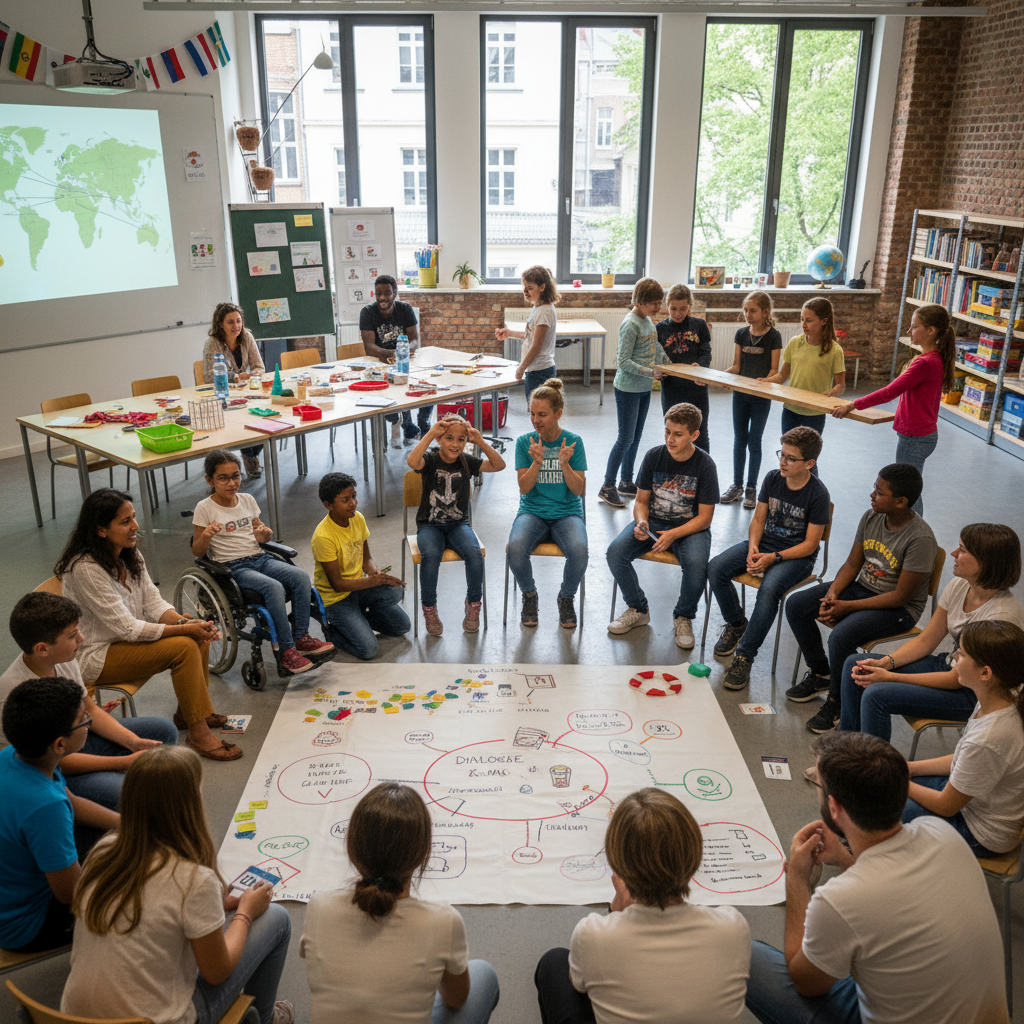
What Participants Learn
- Design non-formal activities adapted to formal education settings to promote inclusion and equity.
- Facilitate dialogue, tolerance and respectful collaboration in multicultural classrooms.
- Identify and respond to barriers such as language gaps, accessibility challenges and social exclusion.
- Build cohesive, team-oriented learning environments through collaborative group dynamics.
- Strengthen students’ sense of identity, belonging and participation in the learning process.
- Create partnerships and ideas for cross-border educational cooperation under Erasmus+.
- Apply non-formal techniques that increase motivation, engagement and reduce dropout risks.
How the Course Works
- Learning by doing, with practical activities from Day 1.
- Experiential learning cycles that combine action, reflection and adaptation to real inclusion challenges.
- Collaborative problem-solving tasks where participants co-create responses to barriers in education.
- Best practice exchange based on diverse European contexts and participant experience.
- Toolkit-building workshops focused on adaptable activities such as storytelling, gamified tasks and group-based inclusion strategies.
- Guided reflection on personal teaching approaches, biases and inclusive practice.
- A supportive, interactive atmosphere where practical strategies are paired with deeper cultural awareness and peer learning.
-
9:00–9:30: Welcome & Course Objectives
9:30–10:30: Icebreaker: Storytelling as an Inclusion Tool
10:30–11:00: Key Concepts: Identity, Belonging, and Barriers
11:00–11:15: Coffee Break
11:15–12:30: Workshop: Mapping Exclusion in Formal Settings
12:30–14:00: Group Discussion: European Best Practices in Inclusion -
9:00–10:00: Non-Formal Techniques for Active Listening
10:00–11:00: Role-Play: Navigating Language and Cultural Gaps
11:00–11:15: Coffee Break
11:15–12:30: Building Trust: Team-Building Dynamics
12:30–14:00: Case Study: Transforming Conflict into Collaboration -
9:00–10:30: Designing Inclusive Activities (Gamification, Art, Debate)
10:30–11:00: Interactive Demo: Digital Storytelling for Diverse Learners
11:00–11:15: Coffee Break
11:15–12:30: Workshop: Creating a Barrier-Busting Activity Toolkit
12:30–14:00: Peer Feedback & Refinement Session -
9:00–10:00: Simulations: Addressing Dropout Risks
10:00–11:00: Critical Thinking Exercises for Student Empowerment
11:00–11:15: Coffee Break
11:15–12:30: Co-Creation: Adapting Methods to Formal Curricula
12:30–14:00: Group Task: Tackling Qualification Disparities -
9:00–10:30: Workshop: Erasmus+ Partnership Strategies
10:30–11:00: Success Stories: Cross-Cultural Classroom Projects
11:00–11:15: Coffee Break
11:15–12:30: Drafting Inclusive Project Proposals
12:30–14:00: Collaborative Peer Review & Pitching -
9:00–10:30: Finalizing Personal Inclusion Action Plans
10:30–11:00: Overcoming Institutional Resistance
11:00–11:15: Coffee Break
11:15–12:30: Pledges: Commitments to Sustainable Change
12:30–13:30: Certificate Ceremony & Networking
13:30–14:00: Closing Reflections & Next Step
What Participants Take Back
- A personalised toolkit of non-formal activities ready for classroom and training use.
- Stronger ability to recognise and address exclusionary dynamics in learning environments.
- Practical techniques to increase student motivation and participation through adaptable non-formal methods.
- Strategies to foster intercultural dialogue, critical thinking and inclusion in formal education settings.
- Ideas for strengthening partnerships and European collaboration around social inclusion.
- Action plans to address language barriers, unequal qualifications and participation gaps.
- Greater confidence in leading inclusive, collaborative and belonging-focused classrooms.
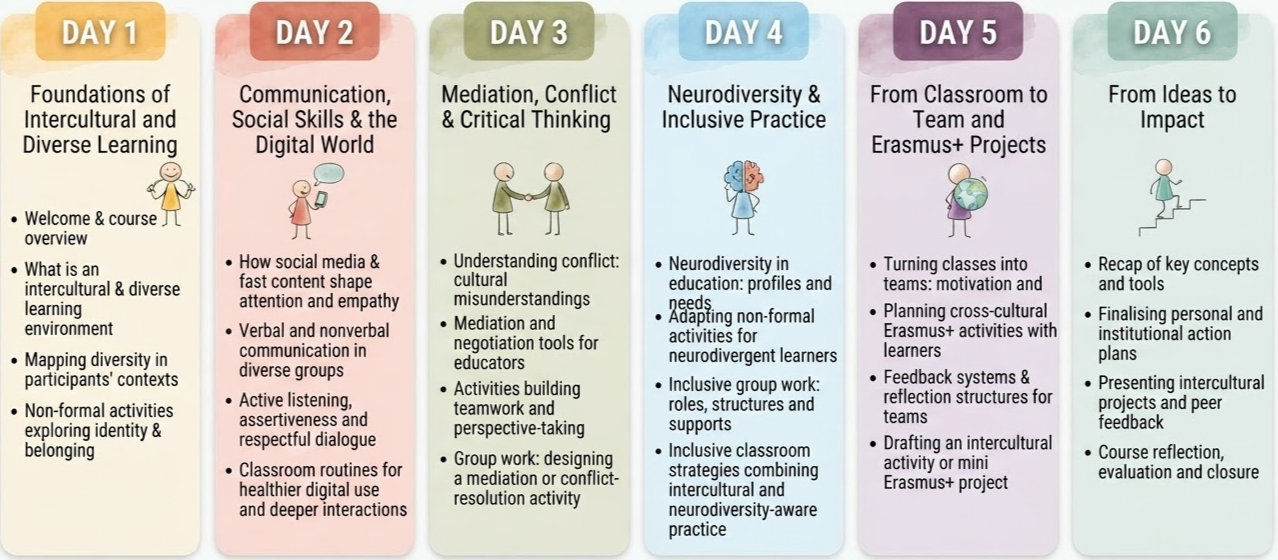
Course Format
- Duration: one-week course (5-6 training days). Alternative formats may be available on request.
- Daily workload: 5-6 hours per day, from 09:00 to 14:00, with one coffee break and several short transitions between activities.
- Language: English.
- Language requirement: participants should have at least an A2/B1 level of English to actively follow the training and take part in discussions and practical work.
- Digital level: no specific digital skills are required. This course focuses on dialogue, group work, and activity-based methods rather than digital tools.
- Equipment: participants are not required to bring laptops or tablets. Materials needed for activities (paper, markers, cards, etc.) are provided
- Target groups: teachers, trainers, youth workers, adult educators, school leaders, and other education professionals.
- Adaptation: examples and activities are adapted to participants’ areas of work, age groups and institutional contexts whenever possible.
- Funding fit: this course is designed to align with Erasmus+ KA1 staff mobility funding for SCH, ADU and VET participants, according to their approved budget and funding rules.
Course Fee
€80 per participant, per training day
This course fee is designed to align with Erasmus+ KA1 staff mobility funding for eligible SCH, ADU and VET participants.
What is Included:
✔Erasmus+ Fundable: eligible for KA1 grants
✔Flexibility Guaranteed: easy changes with minimal restrictions
✔Full experience: coffee breaks to cultural visits
✔ Certificate of attendance: 5 hours per day, 30h total
Post-Course Training: 80€ voucher on 18+ courses
Travel and Stay Support
We support participants with practical guidance before arrival so they can organise their mobility with more confidence.
We suggest:
✔Accommodation options such as hotels and apartments,
✔Local transportation information, and, airport transfer options,
✔ Half-day and full-day trip ideas, cultural activities and useful local recommendations.
These services are not directly provided by Colony of Creators unless explicitly confirmed in advance, but we do help participants identify the most suitable options for their stay and make the most of their Erasmus+ experience.
100% funded by the Erasmus Plus Program through your Erasmus+ SCH, ADU or VET grant.
Eligible institutions may use Erasmus+ KA1 mobility funding to cover course-related costs according to their approved budget and funding rules.
Request Information About This Erasmus+ Course
If you are a teacher, trainer, school leader or Erasmus+ coordinator interested in Smart Teaching: AI-Driven Solutions with ChatGPT and Beyond, use this form to request course details, dates, group options or support for Erasmus+ planning.