Bullying: Identity, Diversity, and Belonging
DESCRIPTION
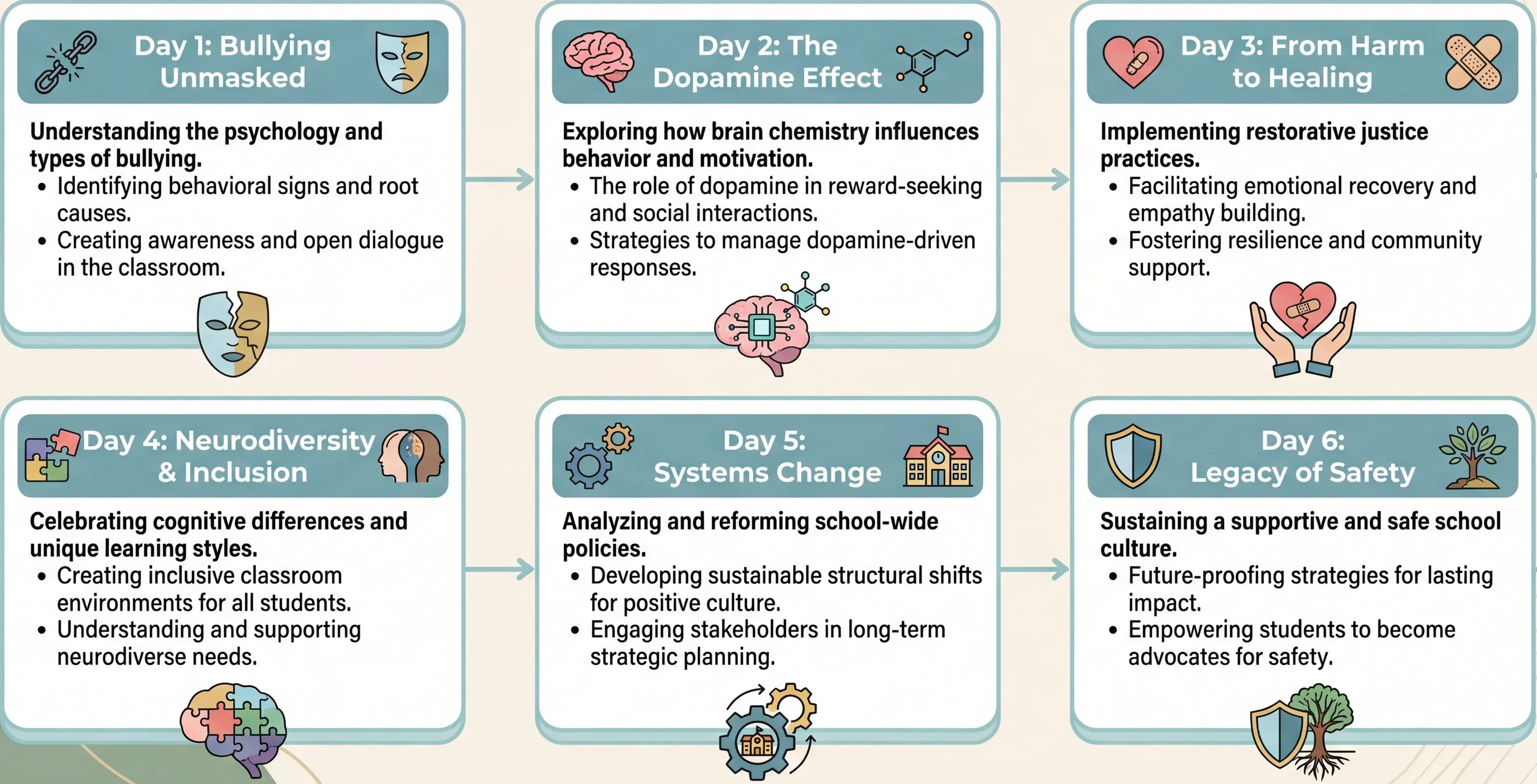
In an era where 1 in 3 EU students faces bullying—from physical aggression to covert cyberbullying—this course merges cutting-edge neuroscience with proven pedagogical strategies to create safer, more inclusive schools.
Educators will explore how dopamine drives both harmful behaviors (like the “reward rush” bullies experience) and motivation, using Dr. Anna Lembke’s Dopamine Framework to balance classroom dynamics.
Participants will dissect all bullying forms: verbal (taunts), social (exclusion), physical, and digital, while leveraging dopamine’s positive role in fostering resilience.
Through EU-aligned case studies like Finland’s KiVa and Germany’s Mediation Zones, teachers will design interventions that address neurochemical triggers, reframe exclusion patterns, and transform classrooms into hubs of empathy.

Learning Objectives
Diagnose and disrupt dopamine-driven bullying cycles using Lembke’s dopamine balance principles.
Implement EU-compliant anti-bullying protocols for cyber, social, and physical aggression.
Design restorative justice circles aligned with the European Commission’s Child Rights Strategy.
Integrate neurodiversity-affirming practices for students with ADHD, ASD, or trauma histories.
Develop “digital empathy” modules to combat cyberbullying’s anonymity effect.
Build Erasmus+ partnerships for cross-border well-being initiatives.
METHODOLOGY
Rooted in the EU’s LifeComp Framework, this course combines:
Neuroscience Workshops: Mapping dopamine’s dual role in bullying/reward systems.
Role-Play Simulations: Practicing de-escalation for verbal aggression and social exclusion.
Case Studies: Analyzing Ireland’s Webwise cyberbullying reports and Sweden’s Friends Program.
Dopamine Detox Labs: Co-creating classroom routines to reduce overstimulation triggers.
Holistic Reflection: Linking interventions to the European Well-Being at School Index.
-
9:00–9:30: Welcome & Baseline Survey on Classroom Climate
9:30–10:30: Icebreaker: Sharing Bullying Encounters Across Cultures
10:30–11:00: EU’s Zero Violence Benchmark Overview
11:00–11:15: Coffee Break
11:15–12:30: Workshop: Typology Analysis (Physical/Verbal/Social/Cyber)
12:30–14:00: Case Study: Cyberbullying Trends in Spain vs. Poland -
9:00–10:00: Neuroscience Primer: Dopamine’s Role in Aggression & Reward
10:00–11:00: Lembke’s Framework: Balancing Pleasure-Pain Equilibrium
11:00–11:15: Coffee Break
11:15–12:30: Lab: Identifying Dopamine Triggers in Bullying Scenarios
12:30–14:00: Role-Play: Interrupting Social Exclusion Cycles -
9:00–10:30: Restorative Justice Lab: Adapting Norway’s No Blame Approach
10:30–11:00: Digital Empathy Tools: Countering Anonymous Cyberbullying
11:00–11:15: Coffee Break
11:15–12:30: Simulation: Mediating a Physically Aggressive Incident
12:30–14:00: Workshop: Trauma-Informed Support for Bullied Students -
9:00–10:00: ADHD/ASD Focus: Sensory-Friendly Anti-Bullying Strategies
10:00–11:00: Co-Creation: Dopamine Detox Classroom Rituals
11:00–11:15: Coffee Break
11:15–12:30: Case Study: Italy’s Benessere a Scuola Well-Being Program
12:30–14:00: Design Sprint: Erasmus+ Project on Neuro-Inclusive Schools -
9:00–10:30: Policy Workshop: Aligning with the EU’s Gender-Based Violence Directive
10:30–11:00: Showcase: France’s Non au Harcèlement National Campaign
11:00–11:15: Coffee Break
11:15–12:30: Finalizing Anti-Bullying Toolkits
12:30–14:00: Dragon’s Den: Presenting Interventions to Simulated School Boards -
9:00–10:30: Pledges: Commitments to EU’s 2030 Bullying Reduction Targets
10:30–11:00: Advocacy: Mobilizing Parent Communities Against Bullying
11:00–11:15: Coffee Break
11:15–12:30: Certificate Ceremony & Resource Exchange
12:30–14:00: Closing Circle: One Action I’ll Take Next Monday
RESULTS
A Neuro-Inclusive Toolkit with protocols for all bullying types (physical, verbal, social, cyber).
Strategies to reduce dopamine-driven conflicts by 50% through sensory regulation techniques.
Action plans for EU-funded projects addressing bullying’s neurochemical roots.
Mastery of Lembke’s “dopamine fasting” techniques for balanced student motivation.
Confidence to implement restorative mediations proven in Dutch and Belgian schools.
A roadmap to certify anti-bullying strategies via European School Education Platform.
Course Format
One-week length: two weeks or other formats are available on request.
4-5 hours per day: from Monday to Friday, with excursions planned during the training.
Fully fundable: Meeting the Erasmus+ KA1 budget criteria.
Flexible: change courses, locations, or dates without fees
Audience and requirements
Courses are structured around the collective sharing of participants’ experiences, therefore all courses are in English. For participants with a very low English level, we advised to come with a translator in the team.
We provide tailored courses for school roles like teachers, principals, and staff, as well as for different levels of IT skills. Our programs are designed to meet the unique needs of professionals such as adult educators, language teachers, youth workers, and social workers, ensuring they have a meaningful impact in education and social work.
€80/ day
Our services include:
✔ Infopack about the location
✔ Pre-arrival information.
✔ Tuition & training materials.
✔ Coffee break.
✔ Training Certificate.
✔Europass Certificate.
✔ Admin & organisational costs.
Additional Services:
✔ Accommodation options, including hotels and self-catering apartments
✔ Half-day and full-day trips
✔ Cultural experiences and local activities
✔ Airport transfer services
✔ Local transportation arrangements
Our Pricing:
100% funded by the Erasmus Plus Program

Fill out our contact form, and we’ll respond to you promptly.
