Teaching with Less: Practical Solutions for Budget-Conscious Classrooms
DESCRIPTION
This course reframes financial constraints not as barriers, but as an opportunity for pedagogical innovation through creativity.
It is tailored for those who must maximize impact with minimal material resources.
The core philosophy focuses on mastering Non-Formal Education (NFE) strategies that leverage human capital, community resources, and found materials.
You will learn practical, non-formal strategies to significantly boost engagement, cultivate critical soft skills (like communication, teamwork, and resilience), and foster a resilient, positive institutional climate, thereby enhancing learning equity and organizational health.
The curriculum is objectives-driven and flexible, ensuring applicability across diverse learning environments, from traditional classroom instruction to interpersonal skill training.
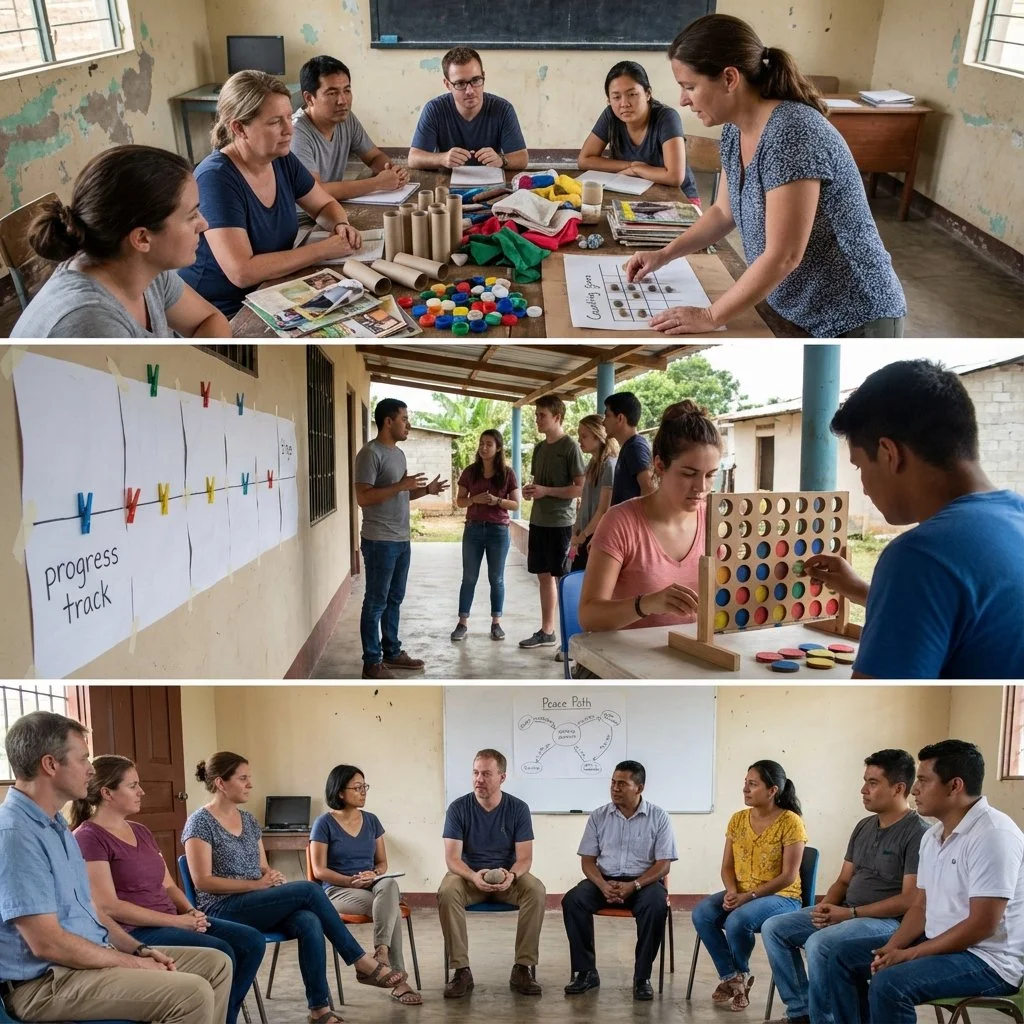
Learning Objectives:
Utilize Non-Formal Education (NFE) tools to successfully adapt traditional curricular content into flexible, practical activities that prioritize life skills, vocational development, and learner empowerment.
Master creative low-cost and zero-cost techniques for teaching, including utilizing customized dice or sourcing inexpensive fidget toys through local donations to support student focus
Apply low-cost gamification elements, such as visual progress tracks and competitive games like Connect Four to enhance student motivation and provide visible tracking of progress.
Engage in structured activities designed to improve interpersonal communication and active listening, such as the "Translated Rant" exercise.
Introduce non-formal negotiation and conflict resolution techniques, utilizing tools like the "Peace Path," applicable in any educational or organizational setting.
Design learning experiences that foster deep comprehension and critical thinking through open-ended questioning and evidence-based discussion, reducing the intellectual risk for diverse learners.
Develop strategies for improving the organizational ecosystem, including implementing student and staff Listening Circles, to promote ownership and system-wide buy-in.
Methodology
The course rejects the passive "Sit & Get" professional development model and rigorously adheres to andragogical principles and the Kolb Experiential Learning Cycle (ELC). Learning is highly active, cyclical, and reflective.
Experiential Learning Cycle: The daily schedule is mapped onto Kolb's ELC: starting with a Concrete Experience (CE), followed by immediate Reflective Observation (RO), drawing theoretical Abstract Conceptualization (AC), and concluding with an Active Experimentation (AE) task.
Action Research: Participants engage in disciplined inquiry focused on improving a work-related practice, collecting, analyzing, and interpreting data.
Cohort/Cadre Model: Participants are intentionally grouped to establish peer support and mentorship, crucial for collaboration and long-term skill retention.
Case Studies: Real-world descriptions of practitioner approaches are used to facilitate discussion regarding strategy, motivation, and outcomes.
Customization and Feedback: Content is customized to reflect the specific challenges and aspirations of the participants with continuous, actionable peer feedback is integrated throughout the sessions of the training.
-
9:00–9:30: The "Scarcity Inventory" & Rapid Review (Preparation/Hook). Identify constraints and review pre-readings linking budget limits to equity.
9:30–10:30: The Paradox of Constraint (Concrete Experience). Groups engage in The Marshmallow Challenge using minimal materials to enforce collaboration and problem-solving.
10:30–11:00: Winner/Loser Reflection (Reflective Observation). Paired activity to reframe negative outcomes as positive organizational lessons and build resilience.
11:00–11:15: Coffee Break
11:15–12:30: Budget is Pedagogy (Abstract Conceptualization). Case discussion linking the challenge outcomes to the theoretical framework of Culturally Relevant Pedagogy (CRP) and equity.
12:30–14:00: The NFE Adaptation Blueprint (Active Experimentation). Drafting a blueprint for a Non-Formal Education activity using only materials existing within their current institutional environment.
-
9:00–9:30: Bait and Switch Misconceptions (Preparation/Hook). Quick quiz to debunk limiting beliefs about low-resource teaching.
9:30–10:30: The Life Cycle Lab (Concrete Experience). Hands-on audit of common discarded items for reuse/recycling potential, integrating science and community analysis.
10:30–11:00: Pencil Texture Rubbings & Group Drawing (Reflective Observation). Non-linguistic reflection capturing key learning using texture rubbings of found objects.
11:00–11:15: Coffee Break
11:15–12:30: The Pedagogy of Pencil and Paper (Abstract Conceptualization). Analysis of how simple, zero-cost art techniques (Scumbling, Crosshatching) can be adapted as core instructional strategies across all subjects.
12:30–14:00: Designing the Free Field Trip (Active Experimentation). Action planning session on leveraging the local environment as a free, non-formal learning space, such as utilizing museums or community centers.
-
9:00–9:30: Name Ten/Quick Review Dice (Preparation/Hook). Energizer using customized dice to prompt rapid content review through gamification.
9:30–10:30: Gamified Progress Track Design (Concrete Experience). Participants design a visible progress track or "Level Unlocking" system for a unit using index cards or chart paper.
10:30–11:00: Beach Ball Reflection & Fidget Tools (Reflective Observation). Physical reflection activity using a tossed object to designate who speaks. Includes demonstration of budget-friendly fidget tools for focus.
11:00–11:15: Coffee Break
11:15–12:30: The Universal Design for Low-Cost Learning (UDL) (Abstract Conceptualization). Conceptualization session on implementing UDL principles with minimal resources, such as utilizing adaptive soft lighting.
12:30–14:00: Quick-Integration Planning (Active Experimentation). Designing three 10-minute "mini-experiential" tasks suitable for integration into rigid formal schedules.
-
9:00–9:30: Translated Rant (Preparation/Hook). Pairs activity to sharpen active listening and accurate perception, challenging communication barriers.
9:30–10:30: Non-Verbal Communication Challenge (Concrete Experience). Groups complete a complex task using only gestures, facial expressions, and simple drawings to emphasize adaptability.
10:30–11:00: Peace Path Simulation Debrief (Reflective Observation). Introduction to the Peace Path—a structured physical model for students to work through conflicts step-by-step.
11:00–11:15: Coffee Break
11:15–12:30: The Peaceful Negotiator: Role-Playing Scenarios (Abstract Conceptualization). Structured role-playing where pairs negotiate solutions to conflict scenarios to build empathy and understanding.
12:30–14:00: Soft Skills Integration Rubric (Active Experimentation). Participants develop specific rubrics focused on assessing the process and behaviors involved in soft skills (collaboration, critical thinking).
-
9:00–9:30: The Gordian Knot (Preparation/Hook). Zero-equipment game to promote creative problem-solving and trust in team dynamics.
9:30–10:30: Collaborative Critical Thinking Challenge (Concrete Experience). Team challenge using newspaper and masking tape to build a structure, focusing on strategy and cooperation under pressure.
10:30–11:00: Ten Ways to Kill a New Idea & Nega-Jar (Reflective Observation). Reflection on how negative phrases hinder innovation. Introduction of the "Nega-Jar" concept for maintaining a supportive environment.
11:00–11:15: Coffee Break
11:15–12:30: School Climate Audit: Staff Morale (Abstract Conceptualization). Discussion on the importance of positive staff climate and organizational connectedness as a low-cost strategy to prevent high staff turnover.
12:30–14:00: Stakeholder Involvement Action Plan (Active Experimentation). Designing a low-cost strategy for comprehensive stakeholder involvement, including planning for Student Listening Circles.
-
9:00–9:30: Group Juggle (Preparation/Hook). Zero-equipment coordination game to reinforce focus and teamwork ahead of final presentations.
9:30–10:30: Action Research Peer Review (Concrete Experience). Participants present initial NFE Action Research plans (focus, data, timeline) to cohorts for constructive feedback.
10:30–11:00: The Evolving Evaluation: Show Me Your Hands (Reflective Observation). Highly efficient reflective activity where participants physically demonstrate their learning or state through non-verbal cues.
11:00–11:15: Coffee Break
11:15–12:30: Sustained Professional Development and Institutional Bridging (Abstract Conceptualization). Discussion on creating mentorship or peer-coaching programs and methods for integrating non-formal learning into formal portfolios.
12:30–14:00: The Commitment Wall & Portfolio Submission (Active Experimentation). Collaborative creation of a Memory Mural using flattened cardboard. Formal submission of the Course Portfolio.
RESULTS
Developing and implementing resourceful, zero-cost, and low-cost learning blueprints that repurpose existing materials and leverage the local community/environment.
A demonstrated capacity to design instruction that intentionally cultivates essential soft skills prioritized by employers and parents, including analytical thinking, communication, resilience, and teamwork.
Immediate, low-cost improvements in organizational health by fostering strong relationships, collegiality, and school connectedness, directly combating staff fatigue and high turnover.
Successful development of mechanisms to integrate and formally recognize non-formal learning outcomes (soft skills, community engagement) into the school body's overall systemic structure, ensuring long-term legitimacy and impact.
A personal 90-day Action Plan and access to peer networks to ensure the sustained application and reinforcement of learned skills post-course.
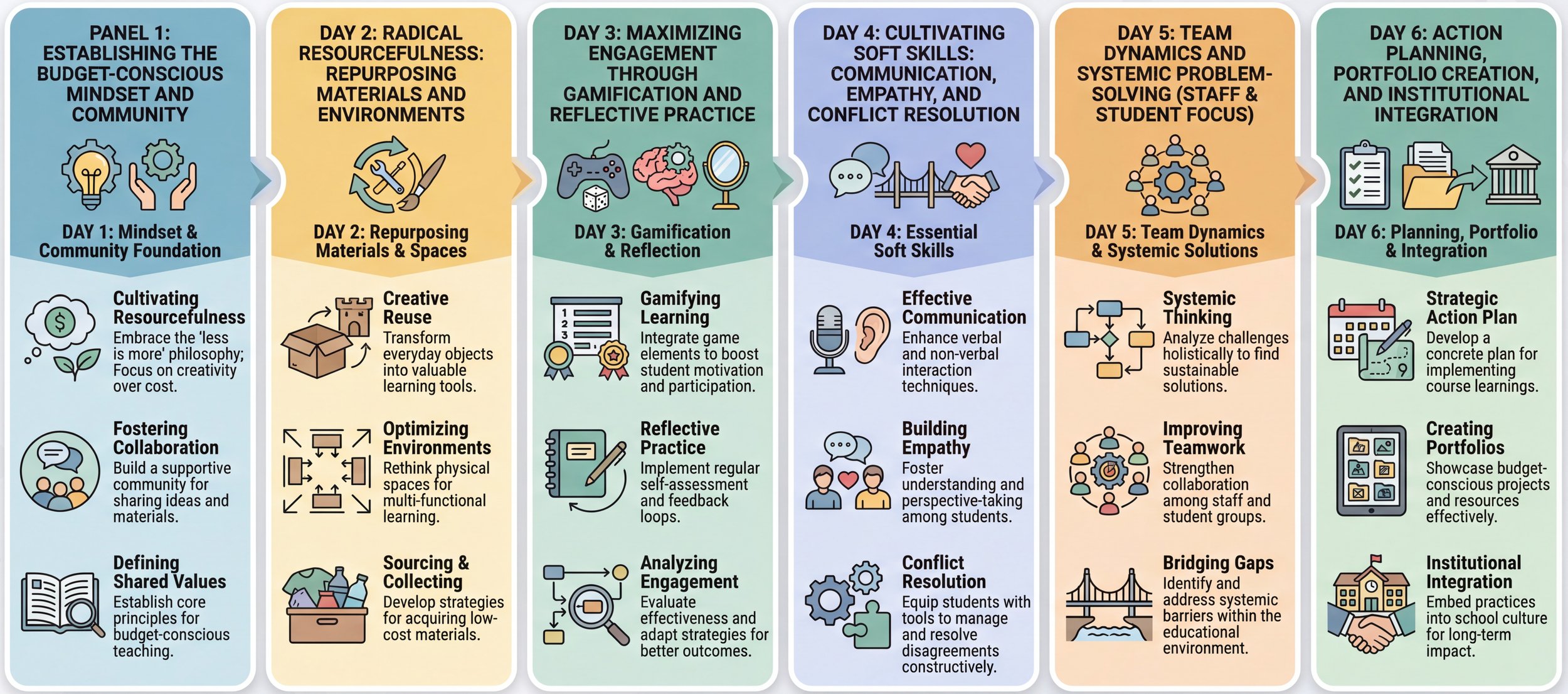
Course Format
One-week length: two weeks or other formats are available on request.
4-5 hours per day: from Monday to Friday, with excursions planned during the training.
Fully fundable: Meeting the Erasmus+ KA1 budget criteria.
Flexible: change courses, locations, or dates without fees
Audience and requirements
Courses are structured around the collective sharing of participants’ experiences, therefore all courses are in English. For participants with a very low English level, we advised to come with a translator in the team.
We provide tailored courses for school roles like teachers, principals, and staff, as well as for different levels of IT skills. Our programs are designed to meet the unique needs of professionals such as adult educators, language teachers, youth workers, and social workers, ensuring they have a meaningful impact in education and social work.
€80/ day
Our services include:
✔ Infopack about the location
✔ Pre-arrival information.
✔ Tuition & training materials.
✔ Coffee break.
✔ Training Certificate.
✔Europass Certificate.
✔ Admin & organisational costs.
Additional Services:
✔ Accommodation options, including hotels and self-catering apartments
✔ Half-day and full-day trips
✔ Cultural experiences and local activities
✔ Airport transfer services
✔ Local transportation arrangements
Our Pricing:
100% funded by the Erasmus Plus Program

Fill out our contact form, and we’ll respond to you promptly.
